An online course and a hands-on coaching check that teach you to run one workout where a wheelchair user, a veteran with a knee replacement and a Spartan racer all train side by side — safely.
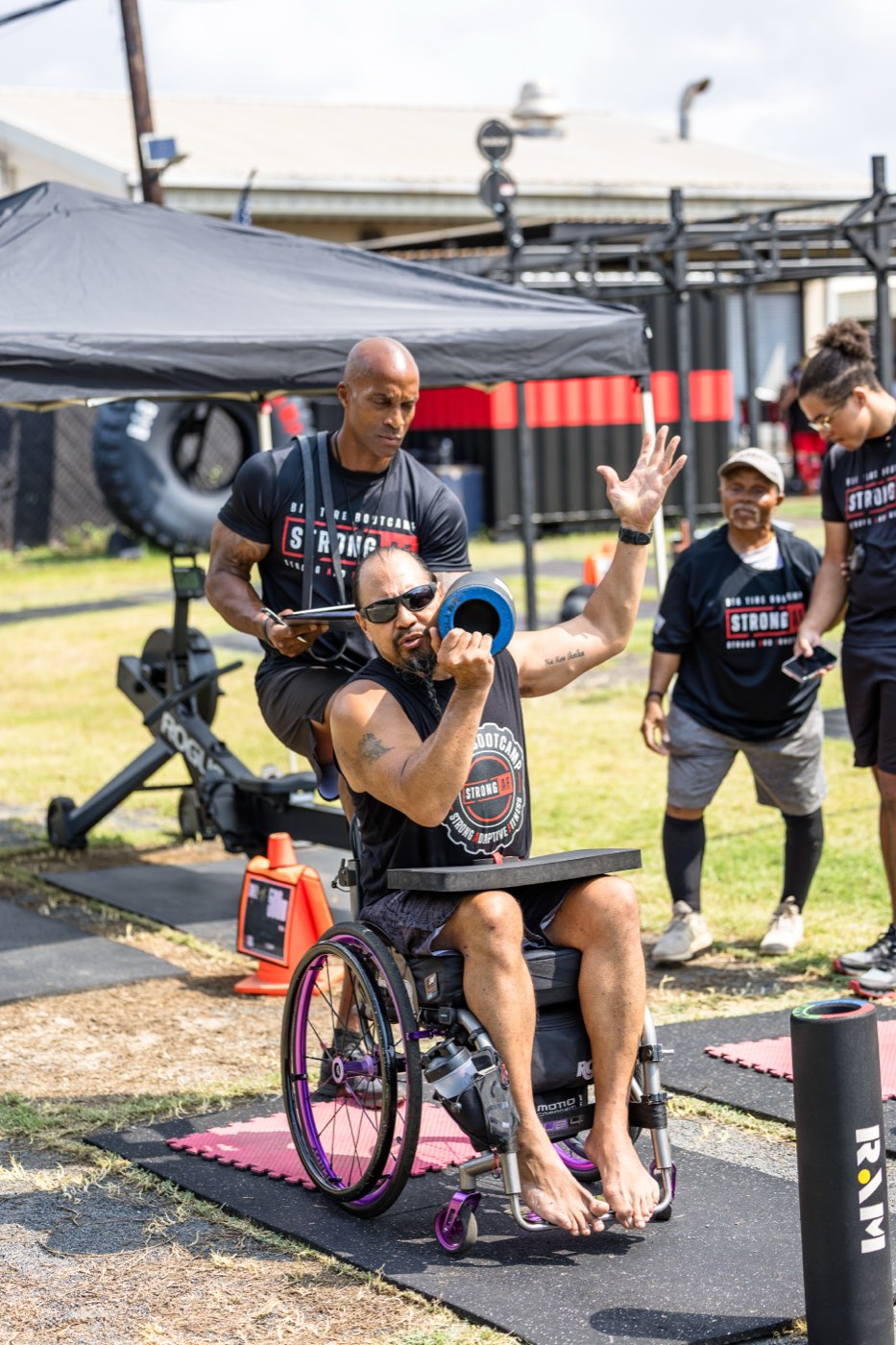
Modules open one at a time, in the order they build on each other: the safety basics first, then adaptive coaching, then how we run it on Warrior Field. Pick a part to see every module and lesson.
A bridge, not a second CPT. Enough anatomy, physiology, assessment and program design to get a new coach functional and safe on a field — condensed on purpose, because your accredited CPT already covers this ground in depth.
Where a coach's authority begins and ends. First on purpose: every dangerous thing a trainer does downstream starts with treating a clinical question as a coaching one.
Ends with a 10-question learning check.
Here is the whole path, from applying to holding the certificate.
Create an account and fill in a short form. A real person reviews every application before your course opens.
No certification needed to start
17 modules, about 14 hours, at your own pace. Each module ends with a short quiz — pass it and the next module unlocks.
Your progress saves as you go
50 multiple-choice questions in 1 hours. Score 80% or better. You get 2 tries, then a 7-day break to review.
Opens after all 17 modules
Coach a real session and show us. 2 ways to do it: send a video from anywhere, or coach in person on Warrior Field. Upload a current CPR/AED card too.
Required — a test alone is not enough
Issued by Big Tire Bootcamp and signed by Head Coach Alim Shabazz. Good for 3 years — renew with a retest and 100 hours of adaptive coaching.
Your dashboard shows how far along you are, what to do next, and how much time you have put in.
Lessons and modules unlock in order, so you build the basics before the harder material.
Every answer comes with the reasoning, right or wrong, and you can retake a quiz as often as you like.
Your place is saved. Come back later and one button takes you to where you left off.
A preview of the course dashboard.
No personal trainer certification needed to start. A person reviews every application, and you will need current CPR/AED before your certificate is issued.
Any coach active in our system trains and certifies at no cost.
Post and department coaches carrying the program under Resolution 27-10 certify at no cost.
Coaches, trainers, therapists, program leaders and volunteers from any organization.
Every enrollment is approved by hand before access opens, paid or not. Questions about which applies to you? Call (808) 808-6337.
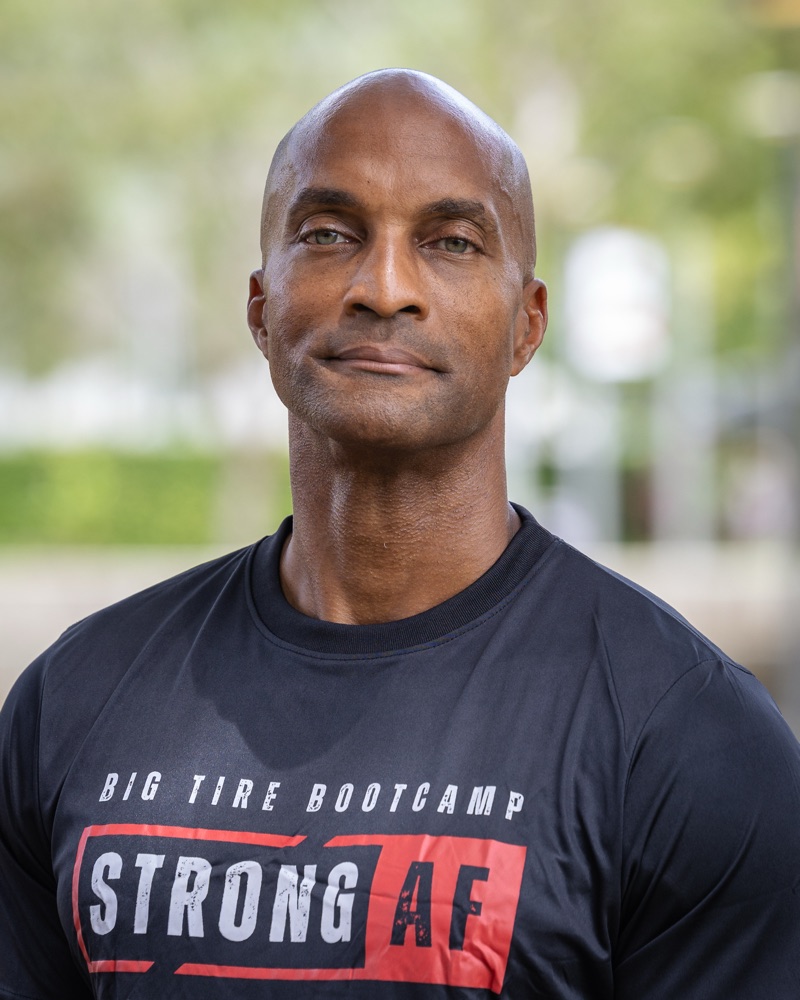
Founder & Head Coach, Big Tire Bootcamp
“You do not have to know everything to make a difference. But you do need to care, be willing to learn, understand your role as a coach, and know how to safely work with the person standing in front of you.”
Issued by Big Tire Bootcamp and signed by Head Coach Alim Shabazz, on the standard run daily at the AMVETS Hawaii Human Performance Center on Warrior Field.
No. Anyone approved can start. You will need current CPR/AED certification before your certificate is issued. Coaches are encouraged to add a nationally accredited personal training certification about a year after earning this one. It broadens where you can work and what you can charge, and it builds on ground this course has already covered.
Apply in a few minutes. We review every application personally and email you when your course is open. Or call (808) 808-6337.
Certifying so you can start a program? Any organization can run one — a veterans post, a church, a school, a community group. This certification is step three of the seven. See how to start a program.
